
World Falun Dafa Day and the Freedom to Practise in Australia
By a Falun Dafa practitioner in Western Australia
May 13 is a meaningful day for millions of people around the world who practise Falun Dafa, also known as Falun Gong. It marks World Falun Dafa Day and commemorates the public introduction of the practice in China in 1992 by Li Hongzhi. For many practitioners, it is both a celebration and a quiet moment of reflection - an opportunity to think about how the practice has shaped their lives and why its principles continue to resonate more than three decades later.
For me, the day carries a deep sense of gratitude. Not only because I found Falun Dafa, but because I live in Australia, where I can practise it openly and peacefully. That freedom is easy to take for granted until you remember that countless practitioners elsewhere do not have it.
In China, where Falun Dafa first spread rapidly through parks, workplaces, universities, and communities during the 1990s, practitioners have faced persecution since 1999. While Australians gather for meditation exercises, cultural performances, or community events on May 13, practitioners in China continue to face imprisonment, surveillance, and pressure simply for holding to their beliefs. That contrast gives the day particular meaning in Australia.
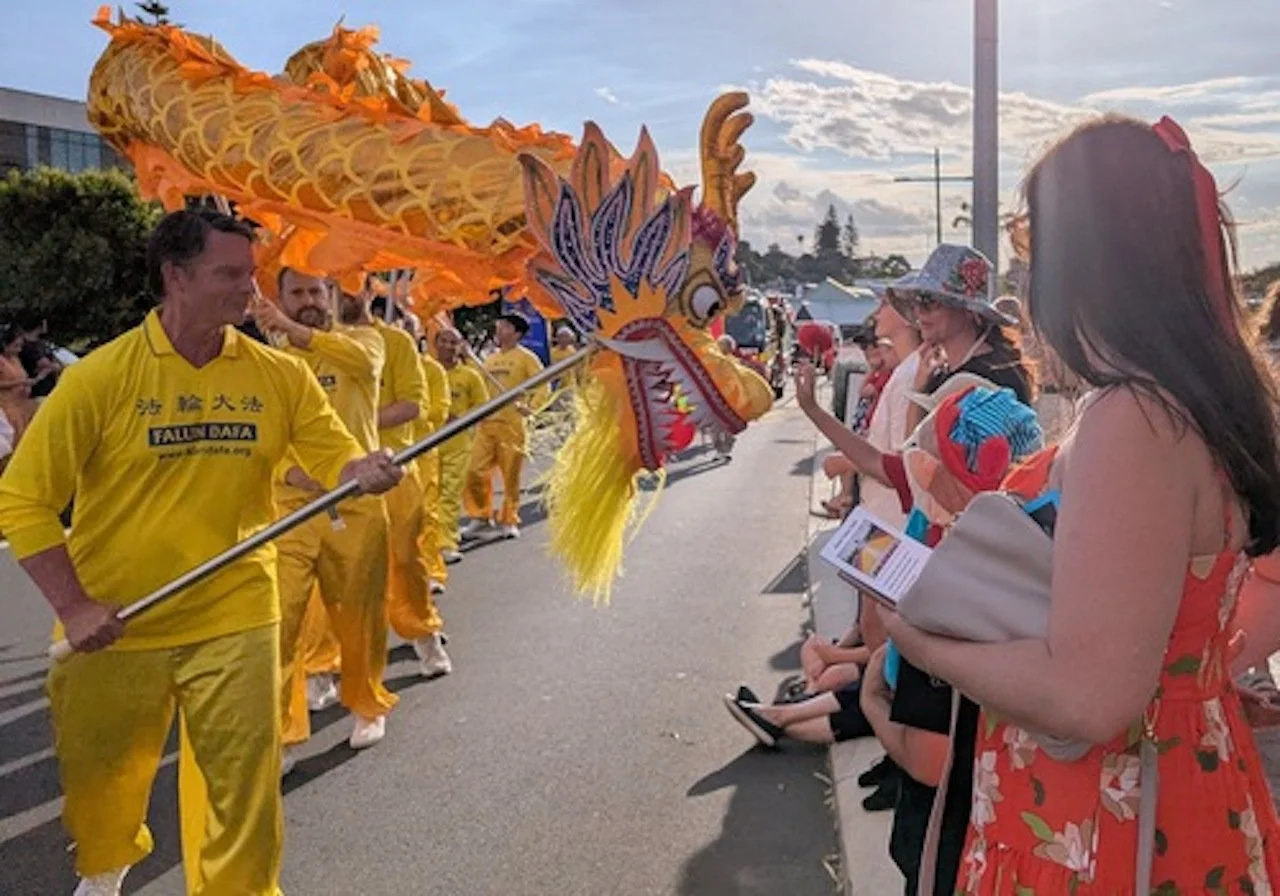
Falun Dafa practitioners participated in the ‘Christmas in the City Street Parade’ in Bunbury on Sunday, December 14, 2025. (photo courtesy: minghui.org)
A practice that changed my perspective
Falun Dafa is centred on the principles of truthfulness, compassion, and forbearance. The practice combines meditation exercises with moral teachings that encourage people to look inward, improve their character, and approach difficulties with patience and integrity. In a world that often feels noisy, combative, and uncertain, those ideas can feel surprisingly grounding.
Many people come to Falun Dafa while searching for something - peace of mind, better health, a sense of direction, or answers to questions they have carried for years. Others encounter it almost by accident. Whatever the path, practitioners often describe the same feeling afterwards: a sense that they have found a framework for understanding life that is both practical and deeply personal. That has certainly been true for me.
Modern life can make it easy to become cynical. Every day brings another crisis, outrage, or reminder of how quickly public discourse can turn hostile. Social media rewards anger more than reflection. News cycles move so fast that people barely have time to process one tragedy before the next appears. It is not difficult to feel discouraged about the state of humanity.
What Falun Dafa offered me was not escapism, but perspective. The practice places strong emphasis on personal responsibility and self-improvement. Rather than focusing on changing other people, practitioners are encouraged to examine their own actions and reactions first. That sounds simple, but applying it consistently can be challenging. It means trying to remain calm during conflict, resisting the urge to retaliate when treated unfairly, and holding yourself to a higher standard even when nobody else seems interested in doing the same.
Over time, that way of thinking changes how you move through the world. Problems that once felt overwhelming become more manageable. Frustrations that would previously dominate your thoughts begin to lose their hold. You become less reactive and more steady. That does not mean life suddenly becomes easy, but it does mean you approach it differently.
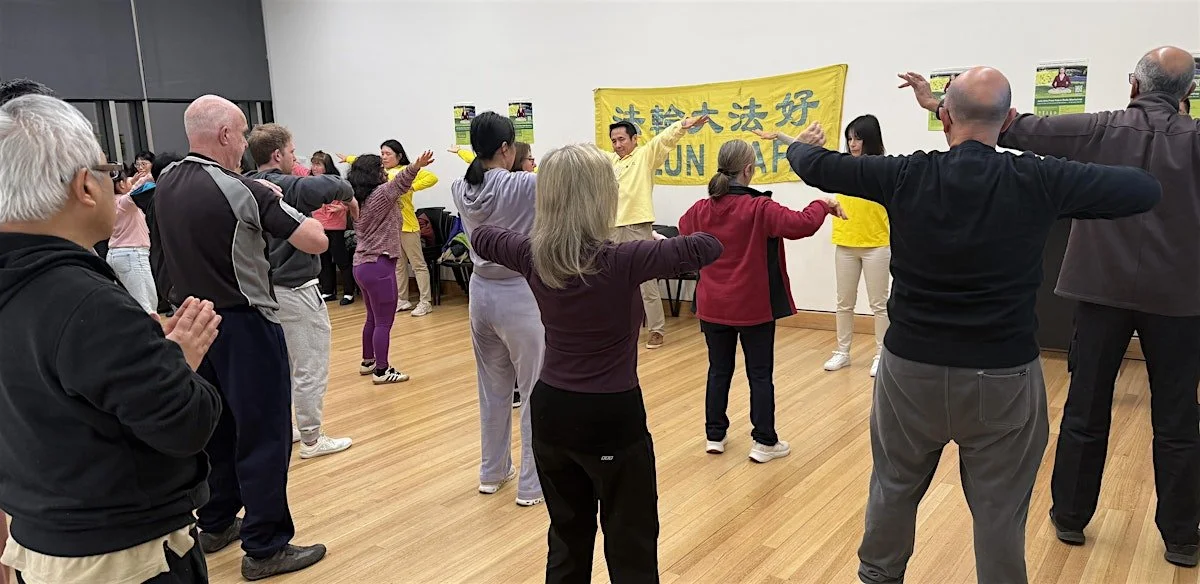
Falun Dafa practitioners teaching the exercises to members of the public in Melbourne, Australia. (photo supplied)
The Australian experience of freedom
In Australia, there is something quietly remarkable about being able to practise Falun Dafa in public without fear. In cities and towns across the country, it is common to see practitioners doing the exercises in local parks or participating in multicultural festivals and community events. Australians passing by may stop to ask questions, accept a flyer, or simply observe the peaceful atmosphere for a few moments before continuing on their way. Those scenes matter because they reflect values Australians often pride themselves on: freedom of belief, freedom of expression, and respect for peaceful community life.
World Falun Dafa Day celebrations in Australia often include exercise demonstrations, music, dance, and cultural performances. They are generally warm, family-friendly events. Yet behind the celebrations sits a more serious reality. Many practitioners in Australia have family members or friends in China who have experienced persecution directly. Some came to Australia seeking safety and the ability to live openly according to their beliefs. Others continue to worry about loved ones overseas.
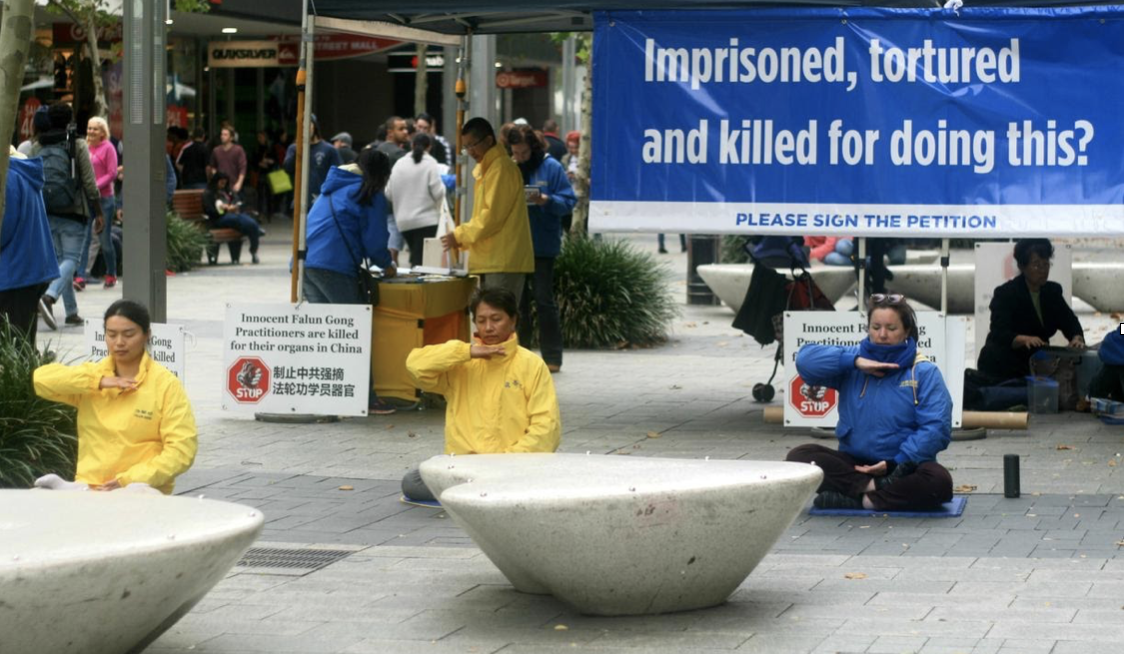
Australian Falun Dafa practitioners raising awareness about human rights abuses in China in Perth, Australia. (photo supplied)
That broader context makes May 13 more than just a cultural observance. It is also a reminder that freedom of conscience should never be treated as guaranteed.
Australia has long benefited from being a society where people from many traditions and backgrounds can coexist peacefully. Chinese-Australian Falun Dafa practitioners are part of that broader multicultural picture. Their presence reflects the diversity of spiritual and philosophical traditions that people bring with them when they make Australia home.
At the same time, Falun Dafa’s appeal is not limited to any one ethnic or cultural group. Practitioners in Australia come from all walks of life. My ancestors were Irish, and I have spent my whole life in regional Australia. Some people discover the practice through friends or relatives, while others encounter it at community events or online. What often draws people in is not ideology or organisation, but the simplicity of the principles and the emphasis on moral character.
Values that still matter
That emphasis on moral character can feel almost countercultural today. There is enormous pressure in modern society to project success, compete constantly, and define yourself through external, material achievements. Falun Dafa encourages something quite different. It asks practitioners to focus on inner improvement and to think carefully about how they treat others. Success is not measured by status or recognition, but by whether a person can remain kind, honest, and tolerant under difficult circumstances. Those values are not always easy to uphold. But perhaps that is exactly why they matter.
One of the things I appreciate most about Falun Dafa is that it provides guidance without demanding blind conformity. The teachings encourage genuine self-reflection rather than performance. Practitioners are expected to apply the principles in everyday life and learn through experience. Each person is responsible for discerning right from wrong for themselves and acting according to their own conscience and moral judgement, rather than being directed by other practitioners. Over time, that process can bring a sense of clarity and stability that is difficult to find elsewhere.
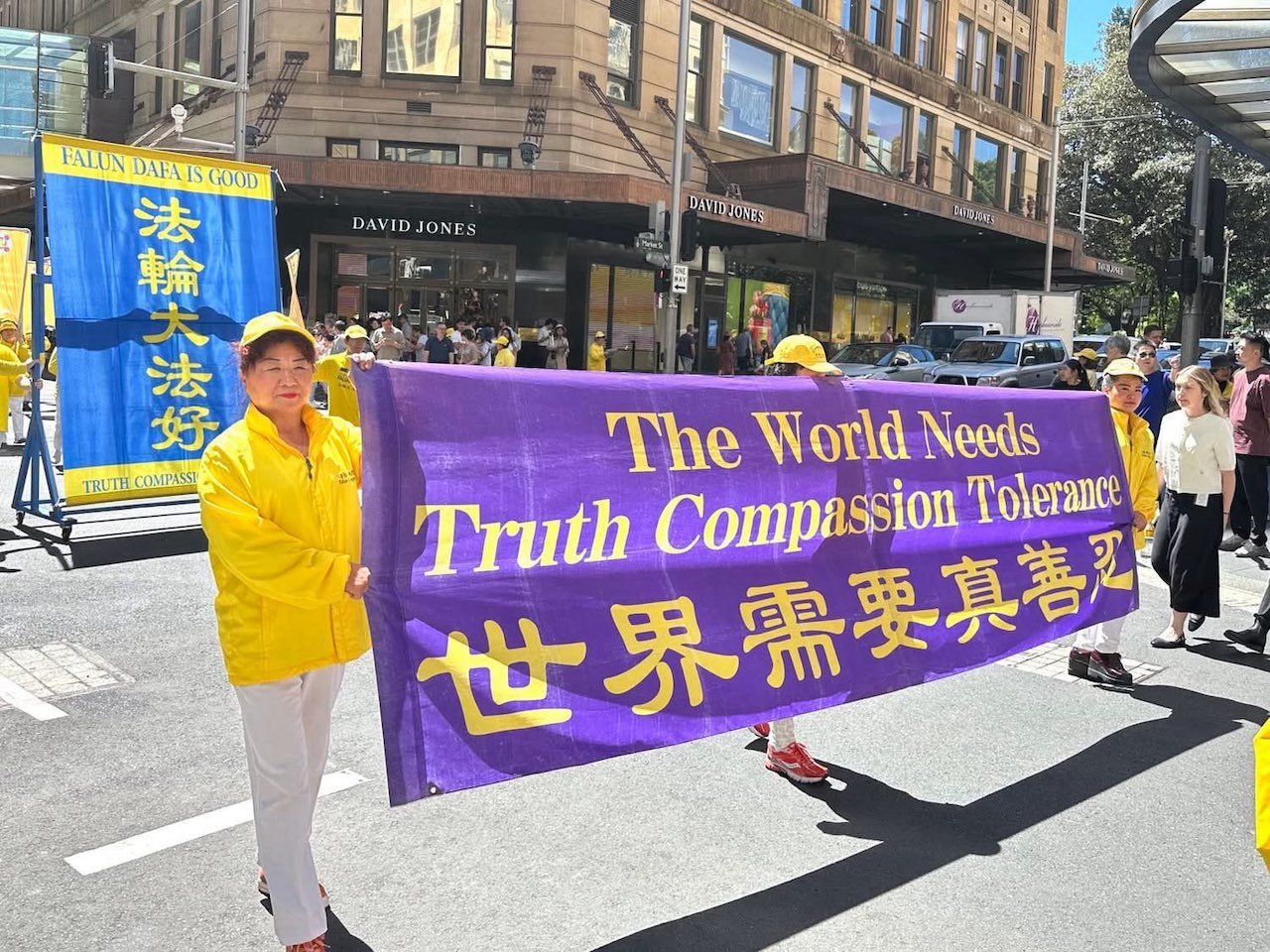
Falun Dafa practitioners participate in a parade in Sydney in 2025. (photo supplied)
Why May 13 continues to matter
For many practitioners, World Falun Dafa Day is also a chance to express gratitude publicly. Gratitude to the founder of the practice, gratitude for the benefits they have received, and gratitude for the ability to practise freely. In Australia especially, that freedom carries real weight when viewed alongside the experiences of practitioners in China.
It is easy to overlook freedoms when they form part of ordinary daily life. Yet history shows that freedoms of belief and conscience are never guaranteed forever. They survive because people continue to value them and speak about why they matter.
That is another reason May 13 remains important. The day is not only about Falun Dafa practitioners themselves. It is also about the broader principle that peaceful spiritual belief should not be persecuted. Regardless of whether someone practises Falun Dafa or not, most Australians would likely agree that no person should face imprisonment or abuse for meditating in a park, reading spiritual teachings, or trying to live according to principles they believe make them a better person.
In many ways, World Falun Dafa Day invites reflection on larger questions about humanity and the kind of society people want to build. Can people remain compassionate during times of division? Can moral principles still guide daily life in an age dominated by speed and distraction? Can individuals maintain hope without becoming naïve about the problems in the world?
For me, Falun Dafa has provided a way to answer those questions with steadiness rather than despair. That may be the most enduring significance of May 13. It is not simply a celebration of a meditation practice introduced in China more than 30 years ago. It is a reminder that even during uncertain times, people still search for meaning, kindness, and moral direction. It is a reminder that inner peace is not passive, and that personal integrity still matters. And here in Australia, it is also a reminder to appreciate the freedom to pursue those things openly.
~~
‘Learn Falun Gong—Australia & New Zealand’ is a website run by Australian and New Zealand Falun Dafa volunteers for the benefit of the general public. Falun Dafa is always taught free of charge.
Falun Dafa volunteers are currently holding free online classes where you can learn the exercises from the comfort of your own home. Register for a free Falun Dafa online exercise class here or for the Falun Dafa 9-Day Lecture Series here.
Views expressed in this article represent the author's own opinions or understandings.