
‘I Believe I Can’: The Importance of Self-Discipline, Habit, and Perseverance
Life’s best outcomes may (for many) be success and happiness, but the journey to their attainment is not an easy road. Instead, the road to success may require some level of self-discipline, perseverance, and faith.
So what does traditional wisdom teach us about success? And can discipline also lead to self-discovery?
Tales From The Past
In many traditional stories, having the “faith to persist” and a “will of steel” have often taught readers to “look within” to find the determination to tackle life’s challenges. Such stories have also taught people to remember who they are and what is really important to them.
One such story is A Tale of Devotion, an ancient Chinese tale of the predestined relationship of grace and loyalty between a man called Xue Rengui (who was born into an impoverished family), and a woman called Wang Baochuan (who was brought up in an aristocratic family).
For this piece, we will call Xue Rengui “Sergie” and call Wang Baochuan “Wenda.”
At the time of marriageable age, Wenda wanted to toss an embroidered marriage ball (similar to a bride tossing her bouquet). In ancient China, the outcome of such an event was believed to be arranged by heaven and fate would determine who a person was to marry.
When the ball was caught by Sergie, Wenda’s father was enraged since he didn’t want to have someone of a lower rank marry into his family. So he blatantly dismissed this arrangement. But Wenda insisted on the arrangement as she had previously dreamed of a similar-looking man and had fallen for Sergie’s righteous and heroic look.
In his anger, Wenda’s father demanded she choose between the marriage or her parents. When Wenda tearfully chose Sergie, her father severed all ties and immediately disowned Wenda as his daughter.
Wenda decided to live with Sergie, so she sold her jewellery so they had some money to live off and followed him to his home—a cave-dwelling.

Depiction of a cave (Credit: Unsplash.com)
After their marriage, Sergie felt uneasy having his wife suffer and live in poverty. He developed a strong sense of manly responsibility and strong faith to go out and earn a name for himself.
From this story so far, having a sense of responsibility is already the first step to self-discipline and willpower.
Usually, we need something to trigger a change for the better—a boost in courage and determination. So how would you find this feeling? Perhaps some reflecting, and looking within for what you really want. Do you want to change yourself? Why do you want to change? What makes it important to you?
Never Giving in to External Pressure
Wenda and Sergie could not imagine that their separation would last 18 years. Living alone as a woman without her husband by her side in ancient China would mean she would have to suffer more.
One type of suffering would be the lack of food and the pain of being separated from a loved one. During the 18 years, Wenda lived off wild vegetables yet even having so little herself, she would still share her home and food with other beggars.
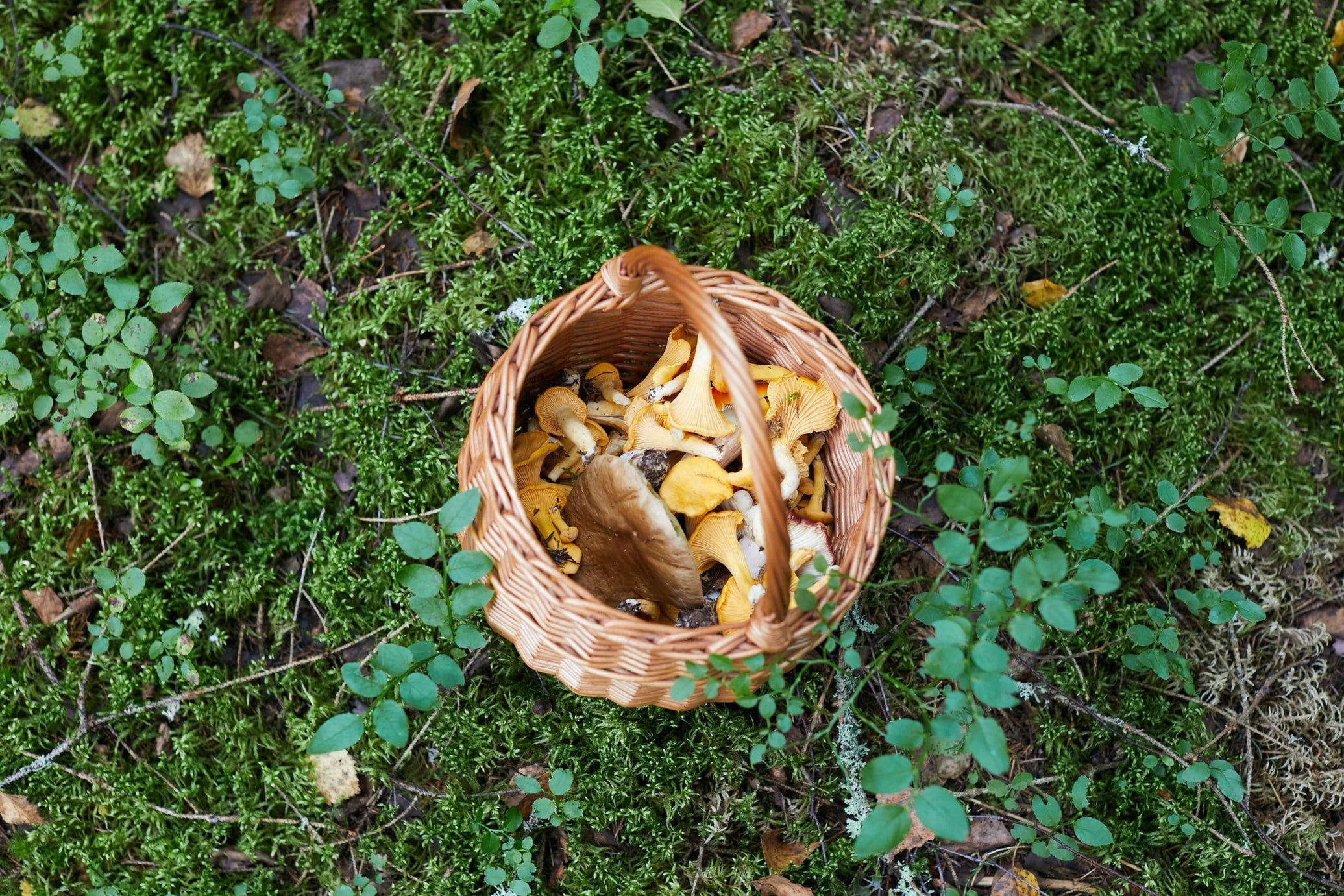
Wild edible mushrooms (Credit: Unsplash.com)
One day Wenda’s father came looking for her, hoping she would return home with him and forget about Sergie and would choose another husband so she could live a better life. However, Wenda refused to go, saying that she had promised her husband to be loyal and would wait for his return.
Other men also came to her. One said she could be his concubine if she slept with him, while another tried to molest her. Still, Wenda managed to avoid these problems and maintained being a noble and virtuous woman.
Meanwhile, Sergie did his best to carry out his mission as a soldier. He never attempted to meet other women and always stayed faithful. As a soldier, he also never gave in. Eventually, he worked his way up, became a general and when he returned, he was awarded the title of Duke for his outstanding military merit.
At the end of the story, Sergie “Rengui” and Wenda “Baochuan” reunited and lived happily thereafter.

A couple’s reunion (Credit: Unsplash.com)
This tale is a lesson of perseverance, and faith that also tests the spirit of how sure-footed one truly is. It is about sticking to the plan that was initiated at the beginning and never forgetting even for a second how important the reason behind it was. In this way, one will lead a righteous path.
The Magical Tool: Habits
Plato once wrote, “The first and greeted victory is to conquer yourself”, and what a powerful tool it is to employ, creating good habits of self-discipline and perseverance help with the conquest and longevity of happiness and success.
When a habit becomes a daily routine, like going to the gym, getting enough sleep, meditating, and cleaning, we no longer have to force ourselves to perform some conscious and often painful task. We simply do it.
Then if that action becomes a part of us, we will naturally reap what we sow.
Some Tips
It is thus working the mind, the mental aspect, to form the ability to stay firm and unwavering in one’s belief and moral standards for one to genuinely appreciate and holistically upgrade, because life is never futile—it all depends on your mind and how you look at things. What perspective and mentality do you really have? And are you happy with it being the person you are? If not, do you have the courage to spark some change?
Sometimes we will struggle and experience burnout, but it is all part of life after all. In fact, the experience of struggle itself allows one to self-reflect, advance, and build a stronger foundation for the next time. You have nevertheless improved your willpower, strength, courage, and faith.

Enjoy the little things (Credit: Unsplash.com)
Through hardships, we build character, which in turn allows us to elevate our minds and improve spiritually. One way to improve spiritually is through the practice of Falun Dafa. Learn more about 5 Reasons why Falun Gong (Falun Dafa) is great!
We hope you enjoyed this post.
‘Learn Falun Gong—Australia’ is a website run by Australian Falun Dafa volunteers for the benefit of the general public.
Views expressed in this article represent the author's own opinions or understandings.