
Why Did China Persecute These Seemingly Peaceful Falun Gong Meditators?
Up until July 1999, Falun Gong received on overwhelming number of accolades and endorsements from many segments of Chinese society. The practice also enjoyed official acceptance and even encouragement.
Whether in a park, business or government setting, with nearly 1 in 13 people practising Falun Gong, it had become part of mainstream society. It was as popular as Tai Chi.

Falun Gong spread rapidly in China. This photo shows a volunteer teaching the Falun Gong meditation hand movements to passersby on the street. (Credit: Faluninfo.net)
So what changed? And why was the Chinese Communist Party (CCP) dead set on banning the practice and stopping people from practising?
Here’s an overview of the timeline of events.
Source Faluninfo.net
> Falun Gong in March, 1996 - China Qigong Association
Mr Li Hongzhi (founder of Falun Gong) withdrew Falun Gong from the China Qigong Association as he refused to charge money as per the association’s requests. Mr Li wished to exercise autonomy from the government and CCP.
Almost immediately, articles critical of Falun Gong began appearing in local-level CCP-controlled media outlets.
The Public Security Bureau then began monitoring Falun Gong practitioners, and Falun Gong books were banned from further publication. Falun Gong books were national best sellers at this time.
There were an estimated 70 million practitioners by 1998, when the harassment and surveillance of practitioners began.
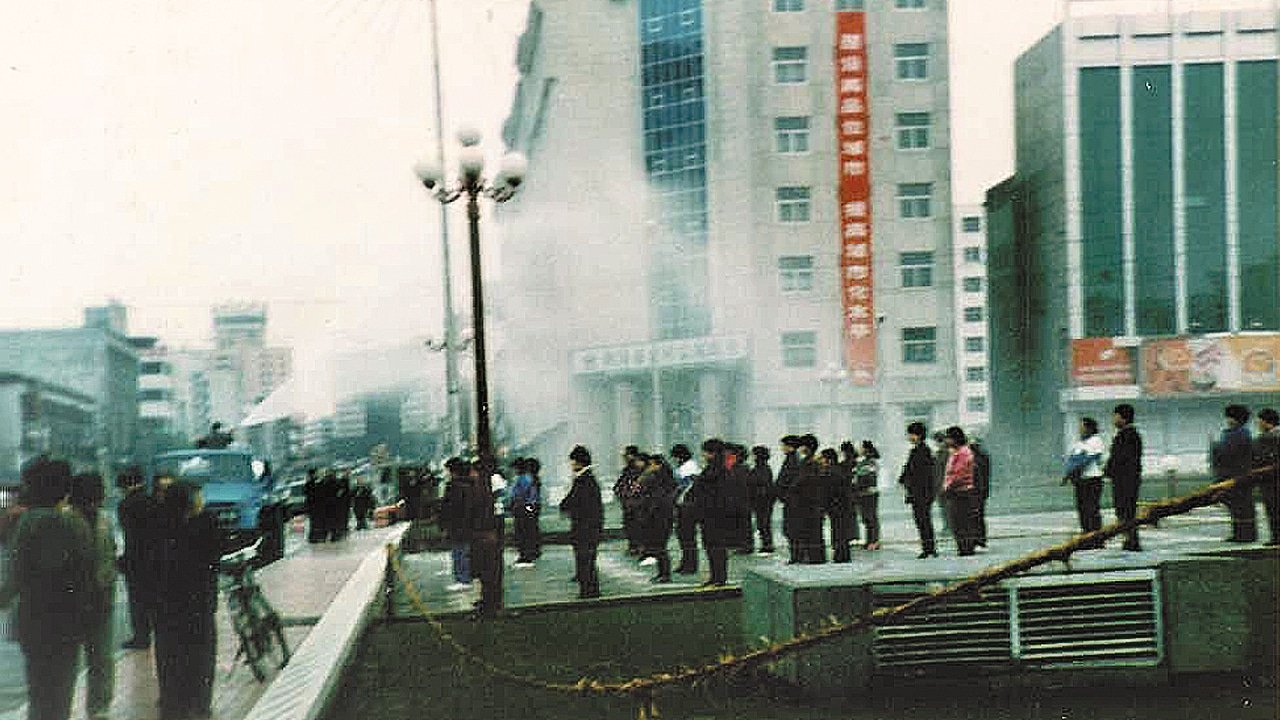
May, 1999 • Using a hydraulic cannon, policemen spray water on Falun Gong practitioners doing group exercises. (Credit: Faluninfo.net)
> Falun Gong in April, 1999 - Newspaper report
A defamatory article on Falun Gong was published in Tianjin city, written by the brother-in-law of China’s public security bureau chief and member of the CCP’s powerful Politburo Standing Committee.
Between April 19 and 24, practitioners held sit-ins outside the newspaper’s office to request a retraction. This was a lawful tactic that had prompted retractions in similar isolated incidents that had arisen elsewhere in China in the late 1990s.
However, this time the Public Security Bureau of Tianjin dispatched riot police to beat up the Falun Gong practitioners who had come to appeal, resulting in injuries to the practitioners.

Police brutality against Falun Gong practitioners in Tiananmen Square. (Credit: Faluninfo.net)
When Falun Gong practitioners requested the release of those detained, they were told that the police were acting on “instructions” from Beijing, and that the arrested practitioners wouldn’t be released without authorisation from Beijing.
The Tianjin police told Falun Gong practitioners they must go to Beijing if they want to petition.
> Falun Gong in 25 April 1999 - Appeals
Between 10,000 and 20,000 Falun Gong practitioners gathered peacefully outside the government’s central appeals office in Beijing, and were directed by police to assemble immediately outside the Zhongnanhai central government compound. Zhongnanhai is the CCP’s central headquarters.

Falun Gong practitioners held an orderly and peaceful demonstration in Beijing on April 25, 1999, to petition their government for a restoration of their right to practice. (Credit: Minghui.org)
Several Falun Gong practitioners met with then-premier Zhu Rongji and other top leaders to request that the harassment and restrictions on publishing Falun Gong teachings end, and that the Tianjin practitioners be released.
Zhu assured those present that the CCP was not opposed to Falun Gong, and agreed to the release of the detained practitioners.
At dusk, Tianjin police released all of the detained Falun Gong practitioners in accordance with instructions from the central government.
However, the then-Chinese leader Jiang Zemin was reportedly angered that Falun Gong practitioners had staged such a large demonstration outside the government compound. He was reportedly disturbed by the size and independence of the Falun Gong, and viewed its moral philosophy as being incompatible with the Party’s atheism.
> 10 June, 1999 - Establishment of Office to Persecute Falun Gong
The Politburo Standing Committee created the extrajudicial 610 Office as a subdivision of the CCP on June 10 (hence the name 610).
The sole purpose of the 610 Office was – and continues to be – to monitor, track, and persecute practitioners of Falun Gong (and other disfavored religious groups).

Diagram of the 6-10 Office structure, from the Communist Party’s seat of power – the Politburo – down to neighbourhood committees and village offices. (Credit: Faluninfo.net)
> 20 July, 1999 - Practitioners in Custody
Hundreds of Falun Gong practitioners were taken into custody by security forces.
Two days later, on July 22, the “ban” on Falun Gong was officially declared.
From then on, the public display of any symbols or images related to Falun Gong was deemed illegal, including possessing or distributing books or other materials promoting the practice. It also became illegal for people to assemble together and practice the exercises.
But according to legal experts, neither the 610 Office nor the CCP had the statutory authority to act on behalf of the state to take such measures against Falun Gong. Indeed, according to Chinese lawyers and international experts such as the Human Rights Law Foundation, the prohibition on practicing Falun Gong is itself an illegal act under both Chinese and international law.
What is interesting to note is that state-controlled media initially said Falun Gong was banned as it was a threat to social order, and because its “theism” and values of Truth, Compassion, and Tolerance were incompatible with Marxist materialism. To learn more about Falun Gong, join the free online webinars here.
Be sure to stay tuned for more posts.
‘Learn Falun Gong—Australia’ is a website run by Australian Falun Dafa volunteers for the benefit of the general public.
References: Falun Dafa Information Center