
I grew up going to mass on Sundays and attending Catholic primary school and high school in Western Australia. Looking back, some of the strongest lessons I absorbed were not really about denominations or theological debates. They were about character.
I remember being taught that kindness, humility, and honesty mattered. I remember hearing about Jesus showing compassion toward people others looked down on or avoided. I remember confession being presented as an honest reflection on one’s own behaviour and shortcomings, not simply a ritual to perform outwardly.
As a child, I developed a strong sense that appearances alone meant very little. A person could attend church every Sunday, donate generously, and appear respectable within the community, but still behave cruelly or dishonestly in private life. Someone could look virtuous on the surface while gossiping, humiliating others, acting selfishly, or quietly pursuing status and material success above everything else.
As I understood it, what really mattered was who you were when nobody was watching. God saw beyond performance. This concept stayed with me long after I left school.
Even now, I think many Christians instinctively recognise that modern society constantly pulls people toward distraction, vanity, greed, and endless pursuit of material comfort. The external world becomes louder and shinier, while inner moral life is neglected. For me, Christianity was never supposed to be only about public identity or social belonging. It was meant to transform the heart.
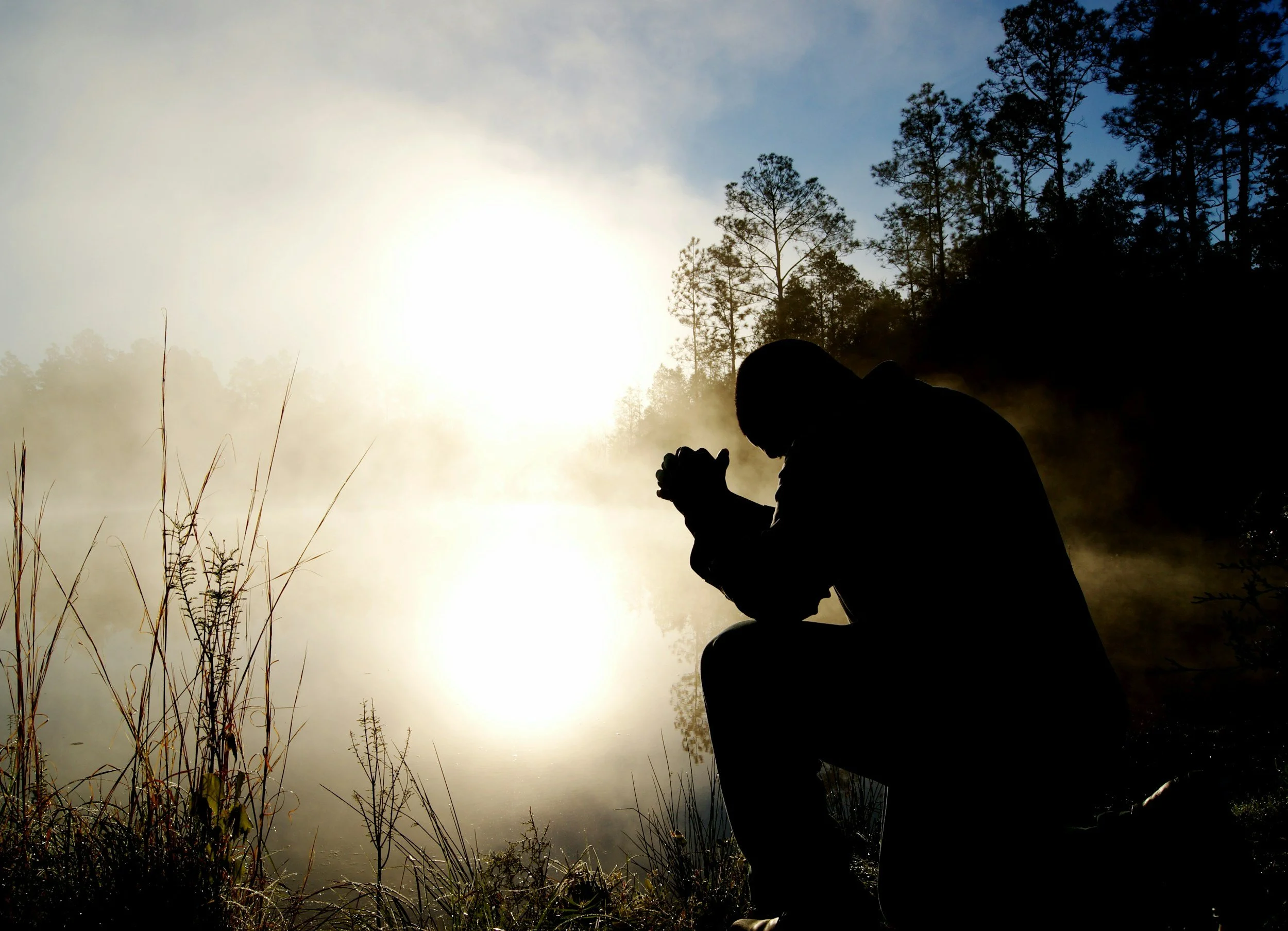
Encountering Falun Gong
Years later, when I first encountered Falun Gong practitioners and began learning more about the practice, although much of it seemed foreign, I was surprised by how familiar some of its moral concerns felt to me.
Falun Gong emerged publicly in China in 1992, drawing upon cultural traditions of meditation, moral discipline, and spiritual self-reflection that have existed throughout Asia for centuries. At the centre of the practice are the principles of Truthfulness, Compassion, and Forbearance, which practitioners strive to apply not only during meditation, but in their everyday conduct and relationships with others.
The practice also teaches belief in a higher divine order and encourages people to let go of selfishness, resentment, vanity, and unhealthy attachment to material pursuits. While its understanding of spirituality differs from Christianity, the emphasis on moral transformation felt surprisingly familiar to me.
Christianity and Falun Gong are not the same religion. They come from different traditions and hold different theological understandings. Even so, I think many Christians would recognise something deeply familiar in the idea that human beings are meant to cultivate virtue, act with sincerity, restrain selfish desires, and live according to higher moral principles rather than becoming consumed by status, pleasure, ego, or worldly success.
Why the Chinese Communist Party feared it
By the late 1990s, Falun Gong had spread rapidly throughout China. Tens of millions of people from many different walks of life had taken up the practice, including students, labourers, professionals, retirees, academics, military personnel, and even some Communist Party members.
What alarmed the Chinese Communist Party was not violence or political revolution. Falun Gong practitioners were known for peaceful meditation exercises and moral teachings. What troubled the CCP was that so many people were turning toward spiritual belief, independent moral thinking, and faith in higher principles outside Communist Party ideology.
The CCP is grounded in an atheistic political ideology that places great emphasis on Party authority and control. Large independent belief systems that encourage loyalty to spiritual principles or conscience outside Party structures have often been viewed with suspicion. Throughout its history, the Party has repeatedly used censorship, imprisonment, labour camps, political campaigns, and other forms of coercion against groups it perceives as challenging its authority.
In 1999, the Chinese Communist Party launched a nationwide campaign to eradicate Falun Gong. What followed was one of the largest campaigns against a spiritual group in modern China.
Since then, countless Falun Gong practitioners have reportedly been imprisoned, tortured, subjected to forced labour, pressured to renounce their beliefs, or disappeared into China’s detention system. Human rights investigators, journalists, legal experts, and religious freedom advocates have spent years documenting abuses connected to the persecution, including allegations of forced organ harvesting from prisoners of conscience that many researchers and legal experts regard as credible.
The Chinese Communist Party has also targeted underground Christians, Uyghurs, Tibetans, democracy advocates, independent journalists, and others viewed as ideologically inconvenient or insufficiently obedient to Party authority. Its record is not merely one of censorship or political authoritarianism. Many human rights observers and legal experts have accused the regime of crimes against humanity.
A story I cannot forget
For me, these issues stopped feeling abstract after hearing directly from people who had endured the persecution. One friend of mine was sent to a forced labour camp in China because of his faith in Falun Gong. He spent two years there manufacturing Christmas lights for export overseas. He knew they were intended for a Western country because of the style of electrical plug attached to them.
I still remember how unsettling that felt when he told me. Somewhere else in the world, families would eventually unpack those lights while preparing for Christmas, a Christian holiday associated with peace, hope, goodness, and reverence toward God. Yet the person who helped manufacture them had been imprisoned for his spiritual beliefs. The contrast has stayed with me ever since.
During his detention, he was tortured with electric batons.
It was difficult to reconcile the image of a peaceful man speaking about compassion with the treatment he had received. When people hear phrases like “human rights abuses,” the words can sometimes sound distant or political. But persecution is intensely personal. These are ordinary human beings enduring pain, fear, humiliation, family separation, and psychological trauma because they refuse to abandon beliefs the CCP cannot control.
What disturbs me most is how easily peaceful groups can be transformed into enemies in the public imagination once a regime’s propaganda arm begins portraying them as dangerous or irrational. History shows just how dangerous that process can become.
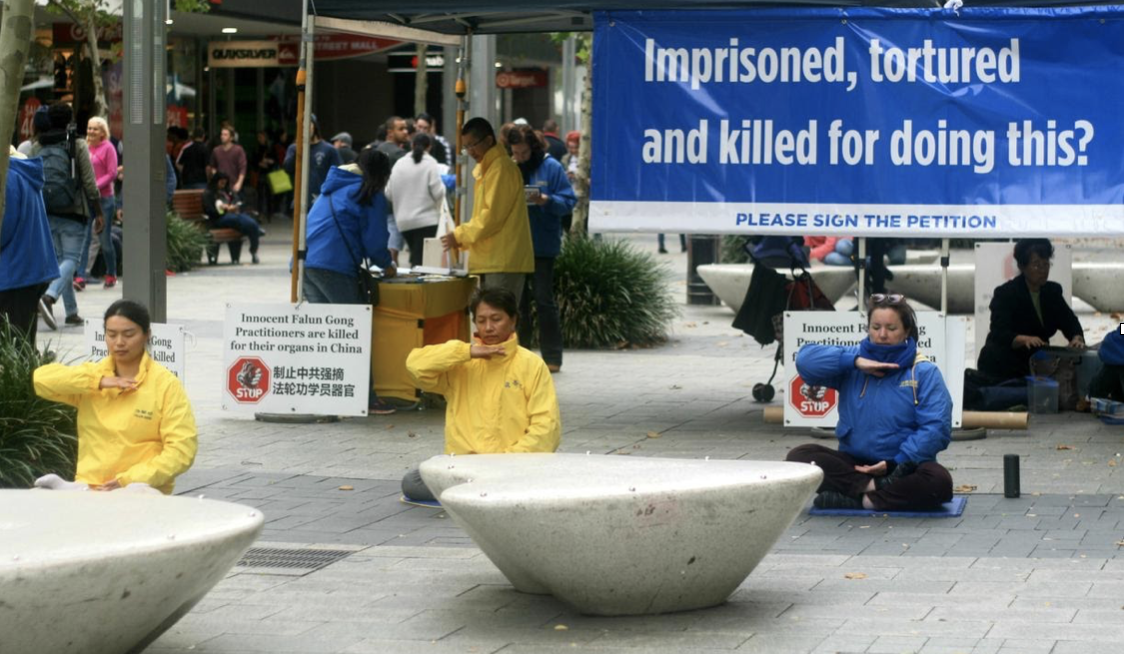
Falun Dafa practitioners in Australia raised awareness about the persecution in China. (supplied)
Why I think Christians should care
I understand why some Christians may initially feel cautious about Falun Gong. Christians naturally want to protect their faith and avoid confusion about spiritual teachings. That instinct is understandable. None of this requires Christians to agree with Falun Gong's spiritual teachings. It simply asks that practitioners be viewed with fairness, compassion, and the same respect Christians would hope to receive themselves.
Christians are not being asked to abandon Christianity in order to recognise suffering or oppose persecution. I think many Christians already possess the moral framework needed to understand why the CCP’s treatment of Falun Gong is so disturbing. The Christian tradition also contains a long history of defending those who suffer unjustly, even when they do not share the same beliefs.
Christians may not share Falun Gong's beliefs, but they should recognise a familiar pattern. For decades, many Chinese Christians have faced church closures, arrests, surveillance, censorship, and pressure to place loyalty to the Communist Party above loyalty to God. Falun Gong practitioners have encountered similar demands. Although their beliefs differ, both groups have experienced what happens when the state seeks to control the spiritual life of its citizens.
Christianity teaches that human beings possess spiritual value beyond the material world. It teaches that goodness matters even when nobody is watching, that conscience matters, and that power without morality becomes dangerous.
Many Christians also recognise that societies can become spiritually unhealthy when material success, political conformity, vanity, and fear replace truth and compassion. That is one reason I think some Christians may find Falun Gong less foreign than they initially expect.
Not because the two faiths are identical, but because both reject the idea that human life should revolve purely around materialism, ego, and worldly status. Both place moral conduct above outward image and encourage people to become better human beings rather than simply more successful ones. In their own very different ways, they also recognise that there is something higher than political power.
Perhaps that is why, despite the differences, Falun Gong never felt entirely foreign to me.
~~
‘Learn Falun Gong—Australia & New Zealand’ is a website run by Australian and New Zealand Falun Dafa volunteers for the benefit of the general public. Falun Dafa is always taught free of charge.
Falun Dafa volunteers are currently holding free online classes where you can learn the exercises from the comfort of your own home. Register for a free Falun Dafa online exercise class here or for the Falun Dafa 9-Day Lecture Series here.
Views expressed in this article represent the author's own opinions or understandings.