
July 20, 1999: marking the start of the brutal ongoing Persecution of Falun Gong in China
On July 20, 1999, the Chinese Communist Party launched a nationwide campaign against Falun Gong, also known as Falun Dafa. Twenty-seven years later, the persecution continues.
For many people around the world, the date passes unnoticed. It rarely receives sustained international attention. Yet for Falun Gong practitioners, human rights advocates, and families affected by the crackdown, July 20 remains deeply significant. It marks the beginning of one of the longest-running religious persecutions in the modern world.
Falun GONG at a Glance
Falun Dafa is a spiritual practice centred on meditation, slow-moving exercises, and the principles of Truthfulness, Compassion, and Forbearance. During the 1990s it spread rapidly across China, attracting people from all walks of life. By some official Chinese estimates at the time, the number of practitioners had grown so large that it rivalled or exceeded the membership of the Communist Party itself.
At first, Chinese authorities generally supported or viewed the movement favourably, and some government reports from the period noted perceived health benefits among practitioners. However, as Falun Gong’s popularity grew into the tens of millions, then-CCP leader Jiang Zemin increasingly came to view the movement as an ideological and political threat.
Despite differing views within parts of the Chinese leadership, Jiang pushed for a sweeping crackdown, viewing Falun Gong's rapid growth and independence from Party control as a challenge to the authority of the Communist Party.
The issue was never violence or extremism. Falun Gong practitioners were not organising political campaigns or seeking public office. Rather, Jiang and hardline Party officials became alarmed by the rapid growth of a spiritual movement guided by principles and beliefs outside the Party's ideological framework and beyond its direct control.
In authoritarian systems, organisations capable of mobilising large numbers of people beyond the ruling ideology are often viewed with suspicion. Under Jiang's direction, that suspicion hardened into systematic repression and became embedded within the Party's broader security and propaganda apparatus.
The Beginning of the Crackdown
In the early hours of July 20, 1999, authorities across China carried out mass arrests of Falun Gong practitioners. Exercise sites were dismantled, books were confiscated, and state media launched an enormous propaganda campaign portraying the practice as dangerous and irrational. Within a short period, Falun Gong had effectively disappeared from public life inside China, not because people stopped believing in it, but because the consequences of open practice became severe.
Over the years, reports from former detainees, journalists, and human rights organisations have described imprisonment, forced labour, torture, psychiatric abuse, and deaths in custody. Investigations into allegations of forced organ harvesting from prisoners of conscience, mainly Falun Gong practitioners, have also drawn international concern.
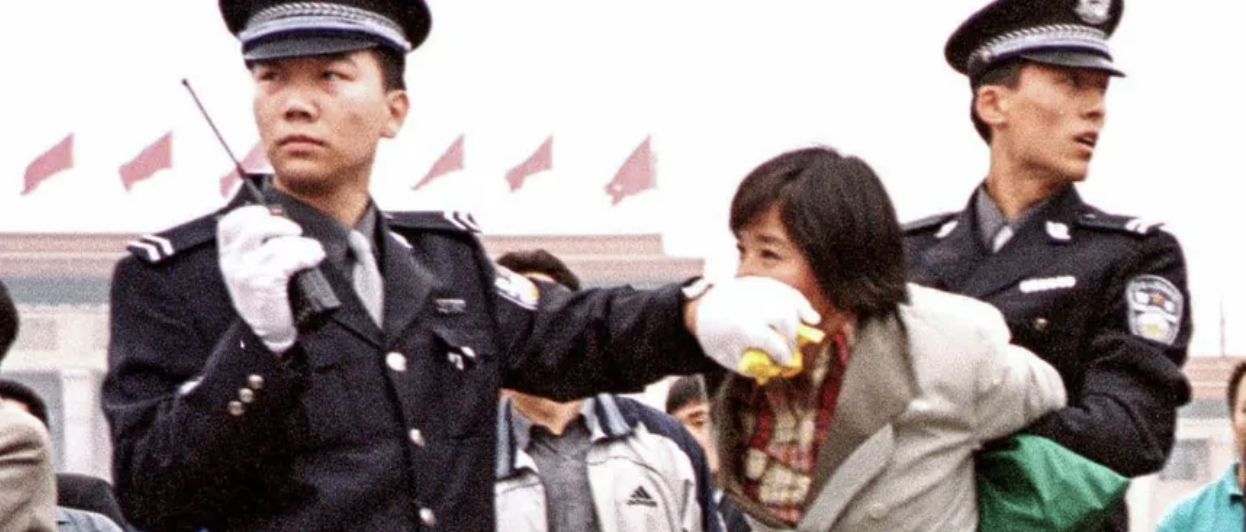
(source: faluninfo.net)
Despite this, the persecution has often existed at the edge of global awareness rather than at the centre of it. Major world events come and go, while the campaign against Falun Gong continues in the background, year after year.
The effects of that propaganda have not remained confined to China. In Australia, an ABC program critical of Falun Gong contributed to suspicion and misunderstanding of the practice among some viewers. At the same time, Chinese-language media aligned with, or sympathetic to, the CCP widely circulated the broadcast as apparent validation of Beijing’s longstanding narrative. Critics argued that the program risked lending credibility to claims that have been used for decades to justify persecution, giving CCP propaganda renewed value both abroad and within China itself.
Why the Persecution Still Matters
It is tempting to view the persecution as an internal Chinese issue, distant from daily life elsewhere. Yet the campaign against Falun Gong illustrates how authoritarian governments seek to control not only political activity, but also belief, conscience, and the moral values by which people choose to live. It also raises difficult questions for democratic societies, where economic interests can influence how strongly human rights abuses are condemned. When violations continue for decades without sustained international pressure, they risk becoming normalised through familiarity alone.
The persecution also affects overseas communities. Falun Gong practitioners around the world, including in Australia, have reported harassment, intimidation, and pressure linked to Chinese authorities. For some practitioners with family members in China, speaking publicly can carry additional risks because relatives may face repercussions — an aspect of what human rights researchers increasingly describe as “transnational repression”. Concerns have also been raised about efforts to influence how Falun Gong-related activities are portrayed, hosted, or permitted outside China. Authoritarian influence does not always stop at national borders.
A Campaign Built on Propaganda
One reason the persecution has persisted for so long is the scale of the propaganda campaign behind it. For more than two decades, Chinese state media has portrayed Falun Gong practitioners as unstable, dangerous, or anti-social. The campaign relied heavily on sensational allegations and highly publicised incidents that many observers argued were misleading or fabricated. Repetition on that scale shapes public perception, especially in a heavily censored environment where alternative accounts are restricted.
Many people who grew up in mainland China encountered only the official narrative. Outside China, others were also exposed primarily to CCP portrayals of Falun Gong, often filtered through media reporting that accepted official claims with little scrutiny. This is one of the most damaging aspects of authoritarian propaganda. It does not merely punish those directly targeted; it reshapes society by teaching people what topics are unsafe to discuss and what opinions are expected.
Outside China, direct conversation often cuts through these narratives more effectively than political debate. People who meet Falun Gong practitioners in person are frequently surprised by how ordinary they seem. Practitioners from many walks of life and cultural backgrounds — including students, professionals, parents, and retirees — often gather peacefully in public parks for meditation and exercises. Although Falun Gong originated in China, it is now practised by people of many nationalities, a reality that contrasts sharply with the image constructed through years of hostile propaganda. That gap between reality and official portrayal reveals how powerful state-controlled narratives can become when repeated long enough.
Endurance Without Violence
One of the more unusual aspects of the Falun Gong story is the response of practitioners themselves. After twenty-seven years of persecution, there has been no armed resistance movement, no campaign of retaliation, and no attempt to answer violence with violence. Practitioners have instead focused on peaceful protests, information campaigns, legal advocacy, and public awareness efforts.
Critics sometimes dismiss candlelight vigils or meditation demonstrations as symbolic gestures with little practical effect. But history suggests that sustained peaceful witness can matter more than it initially appears.
Authoritarian governments often rely on silence, fatigue, and the assumption that international attention will eventually fade. Continuing to speak openly about abuses challenges that expectation.
Many practitioners continue because they believe the principles of truthfulness, compassion, and forbearance are worth upholding regardless of political pressure. Maintaining those values under difficult circumstances becomes, in itself, a form of resistance.
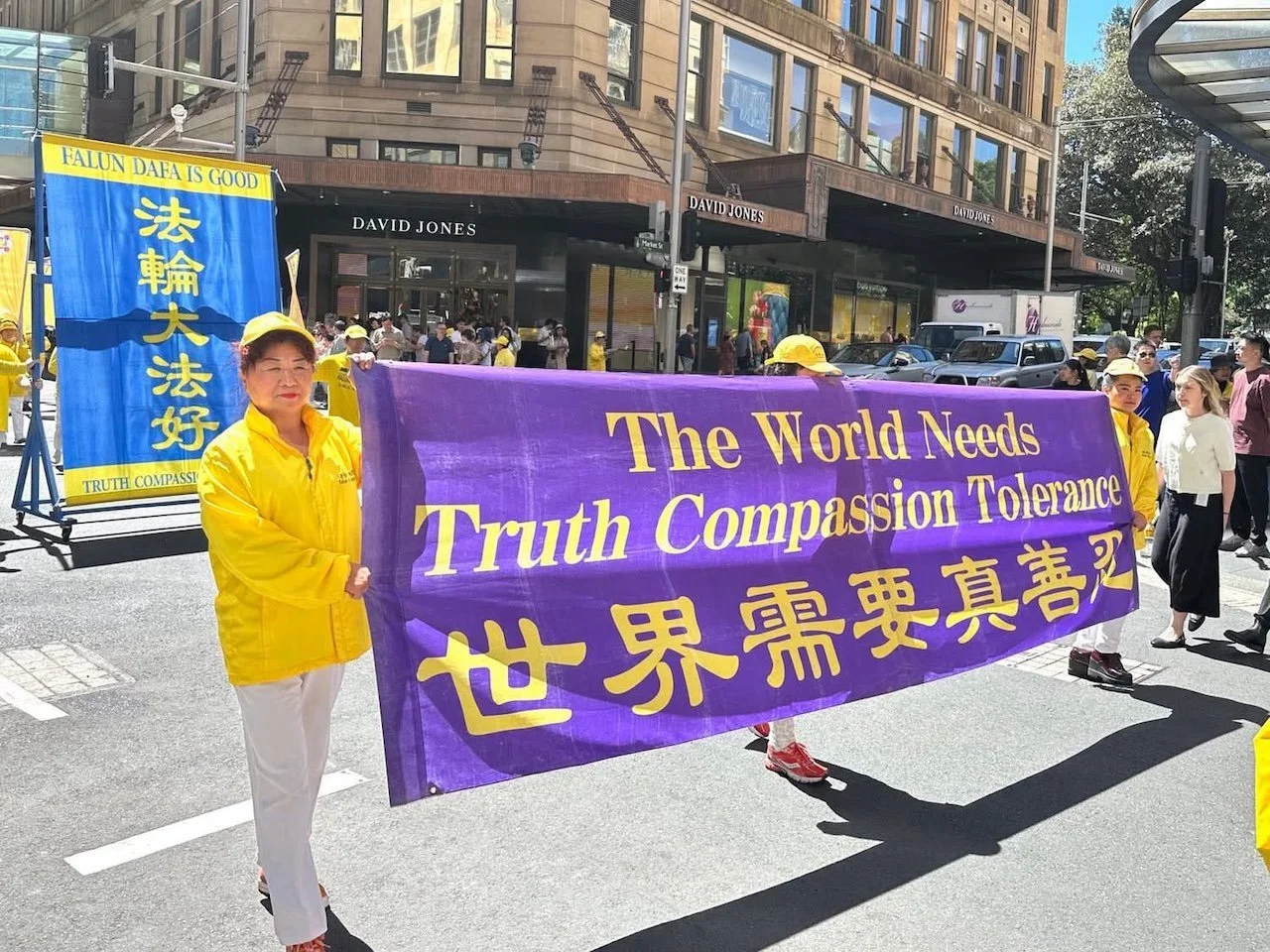
Falun Dafa practitioners march through Sydney’s CBD in 2025 holding banners that showcase the values of the practice while raising awareness about the persecution in China. (supplied)
Remembering July 20
The twenty-seventh anniversary of the persecution arrives during a period of growing international debate about China’s global role, foreign interference, censorship, and human rights. Concerns once dismissed as fringe are now discussed more openly by governments, media organisations, and policy analysts. Yet Falun Gong remains an issue many people know little about.
Part of this may be because the persecution does not fit neatly into modern political categories. The story involves spirituality, ideology, authoritarian control, propaganda, and human rights all at once.
Across Australia this July, practitioners will again gather for candlelight vigils and commemorative events. Commemorating July 20 is not simply about revisiting the past. It is about recognising that the persecution is still happening now.
Some practitioners remain imprisoned, families remain separated, and censorship continues, alongside surveillance and coercive “transformation” efforts aimed at forcing people to renounce their beliefs.
At the same time, Falun Dafa continues to be practised openly around the world. In cities across Australia and elsewhere, practitioners still gather in parks for meditation and exercises much as people did in China before 1999. That quiet continuity carries its own meaning.
The persecution was intended to eliminate Falun Gong as a belief system and social movement. Twenty-seven years later, it has not succeeded. Practitioners continue to speak publicly, organise events, and remember those who suffered or died during the campaign.
History often moves more slowly than people expect. Some injustices last far longer than seems possible at the beginning. But remembrance still matters, especially when governments work hard to erase uncomfortable truths from public memory.
On this anniversary, those affected by the persecution deserve to know their experiences have not been forgotten. The longer such injustices persist, the greater the risk they become accepted as normal. Remembering is one way of resisting that.
~~
‘Learn Falun Gong—Australia & New Zealand’ is a website run by Australian and New Zealand Falun Dafa volunteers for the benefit of the general public. Falun Dafa is always taught free of charge.
Falun Dafa volunteers are currently holding free online classes where you can learn the exercises from the comfort of your own home. Register for a free Falun Dafa online exercise class here or for the Falun Dafa 9-Day Lecture Series here.
Views expressed in this article represent the author's own opinions or understandings.