
Top 10 Frequently Asked Questions About Falun Gong
Insiders reveal the top 10 questions about the practice!
1. What is Falun Gong?
Falun Gong (also known as Falun Dafa) is a traditional spiritual practice guided by the principles of Truthfulness–Compassion–Forbearance. It consists of teachings and five gentle exercises (qigong) that benefit both the mind and body.
The belief system of Falun Gong encourages practitioners to let go of unhealthy habits. When encountering hardships or conflicts, adherents are taught to look within for the cause rather than blame others; to endure without retaliation; and to identify their own shortcomings in order to improve. It is a deeply self-reflective practice.
2. Who founded Falun Gong?
Falun Gong was introduced by Mr. Li Hongzhi in 1992 in Changchun, China, and was first taught publicly in May of that year. Between 1992 and 1994, Mr Li was invited to deliver over 50 in-person lectures across cities such as Beijing, Wuhan, and Guangzhou.
Amid a surge of interest in energy practices (qigong) at the time, Falun Gong stood out and quickly gained widespread recognition. The Chinese Communist Party initially supported the practice, and many of its members practised Falun Gong prior to 1999.
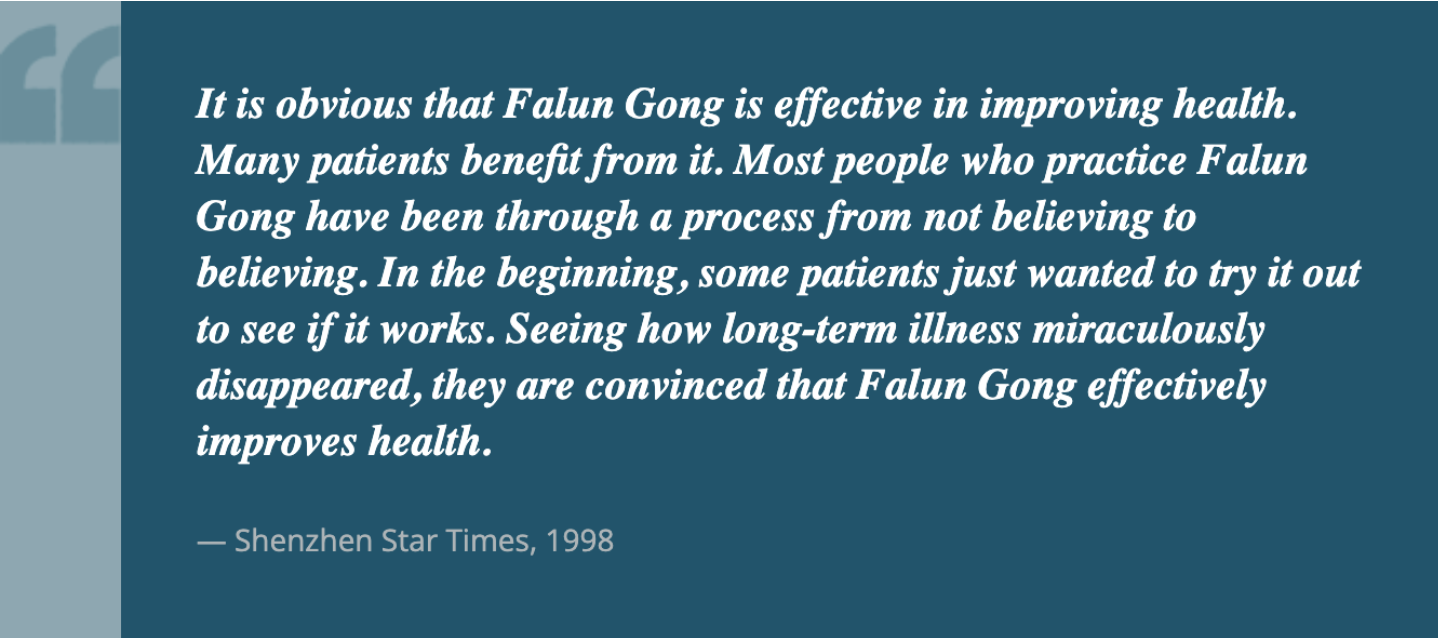
(courtesy of faluninfo.net)
3. What’s the meanings behind Truthfulness-Compassion-Forbearance?
Truthfulness–Compassion–Forbearance are the core guiding principles of Falun Gong and carry many inner meanings.
Truthfulness can mean returning to one’s true self, telling the truth, being honest, and acting with sincerity. Compassion involves kindness, consideration for others, and understanding different perspectives. Forbearance encompasses patience, fortitude, stoicism, and endurance.
4. How does Falun Gong differ from other energy practices?
Whilst other practices often focus on curing illness, Falun Gong emphasises moral integrity and cultivating the mind. Practitioners follow the principles of Truthfulness–Compassion–Forbearance to elevate their moral standards—an emphasis not commonly found in other practices.
Many practitioners report improvements in their family life, work, and relationships after beginning the practice.
5. I’m confused. Falun Gong originated in China, why is it now persecuted in there ?
Falun Gong became one of the largest groups in China (outside of the Chinese Communist Party), with estimates of over 100 million practitioners in the 1990s, compared to around 65 million CCP members at the time.
The CCP fears losing power, which is why you can’t vote them out, and it seeks to maintain control of the Chinese populace. The rapid growth of Falun Gong was perceived as a threat to its authority. In July 1999, the practice was banned.
Practitioners were detained in brainwashing centres and prisons for their beliefs. Reports indicate that many faced torture and other severe abuses if they refused to renounce the practice. Family members were often pressured to report loved ones, creating distrust within households and communities. This situation continues to this day.
6. Is Falun Gong political?
Falun Gong practitioners have faced persecution by the Chinese Communist Party, including detention and reported abuses in various facilities across China.
However, the practice itself does not seek political power.
When practitioners raise awareness of the persecution—whether at tourist sites or through engagement with officials—they aim to highlight human rights concerns and bring international attention to the issue.
You may wish to refer to our previous article for more information: “Is Falun Gong Political?”
7. I’ve heard Falun Gong advocates for abstinence or extreme lifestyles?
Practitioners are encouraged to maintain a balanced, normal life, including work and study. Cultivating the mind and practising the exercises can be integrated into a healthy and moral lifestyle.
8. How does one practice Falun Gong?
Falun Gong is free to learn and open to all. It can be practised individually or in groups. The practice typically involves reading the main text, Zhuan Falun, improving one’s character, performing the exercises, and sharing experiences with others.
All teaching materials are publicly available online, and many people begin by studying independently. Where possible, group study and practice can further support spiritual development.
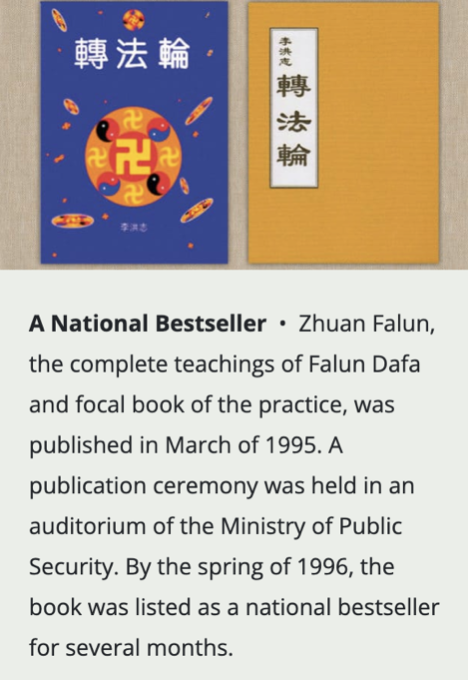
Picture of the main book Zhuan Falun in Chinese. Zhuan Falun has been translated into over 40 languages. (courtesy of faluninfo.net.)
9. How many people practice Falun Gong worldwide?
Falun Gong’s universal values have attracted practitioners around the world, and its teachings have been translated into over 40 languages as of 2025. It is estimated that over 100 million people practise Falun Gong globally.
There are no restrictions based on nationality, race, sex, orientation, age, or occupation—everyone is welcome.
10. I’m interested - where do I start?
You can begin by reading Falun Gong or Zhuan Falun, attending a free nine-day instruction and exercise class, or visiting a local practice site.
For more information on classes, visit https://learnfalundafa.org/
~~
Falun Dafa volunteers are currently holding free online classes where you can learn the exercises from the comfort of your own home. Register for a free Falun Dafa online exercise class here or for the Falun Dafa 9-Day Lecture Series here.
LEARN MORE ABOUT THE FREE ONLINE FALUN DAFA CLASS HERE
Learn Falun Gong—Australia & New Zealand’ is a website run by Australian & New Zealand Falun Dafa volunteers for the benefit of the general public. Falun Dafa is always taught free of charge.
Disclaimer: Individual results may vary. Information is provided as a guide only, and does not take the place of professional or medical advice.