
From Grief to Peace: My Journey with Falun Gong
My relationship with faith began in childhood. I attended a Catholic primary school in the 1970s and remember being taught about virtues and hearing stories from the Bible. With a child’s innocence, I understood Jesus as being about goodness and kindness, and I deeply wanted to be that too. I used to ride my pushbike to my school on weekends so I could pray in the chapel by myself. I even thought I might become a nun when I grew up.
My family consisted of an intellectual dad, a hardworking mum, an older brother, me, and two younger sisters. We lived in a very remote, regional, coastal town, and my parents were somewhat reclusive, so we didn’t socialise much except with each other.
My dad ran his own law firm, so we didn’t take many holidays. I remember six-week summer holidays being spent entirely at home with no visitors, no excursions—we just entertained ourselves. I didn’t really have friends; my closest relationship was with my second youngest sister, Tricia. We spent a lot of time together, and I never felt judged by her—I felt confident she loved me exactly as I was.
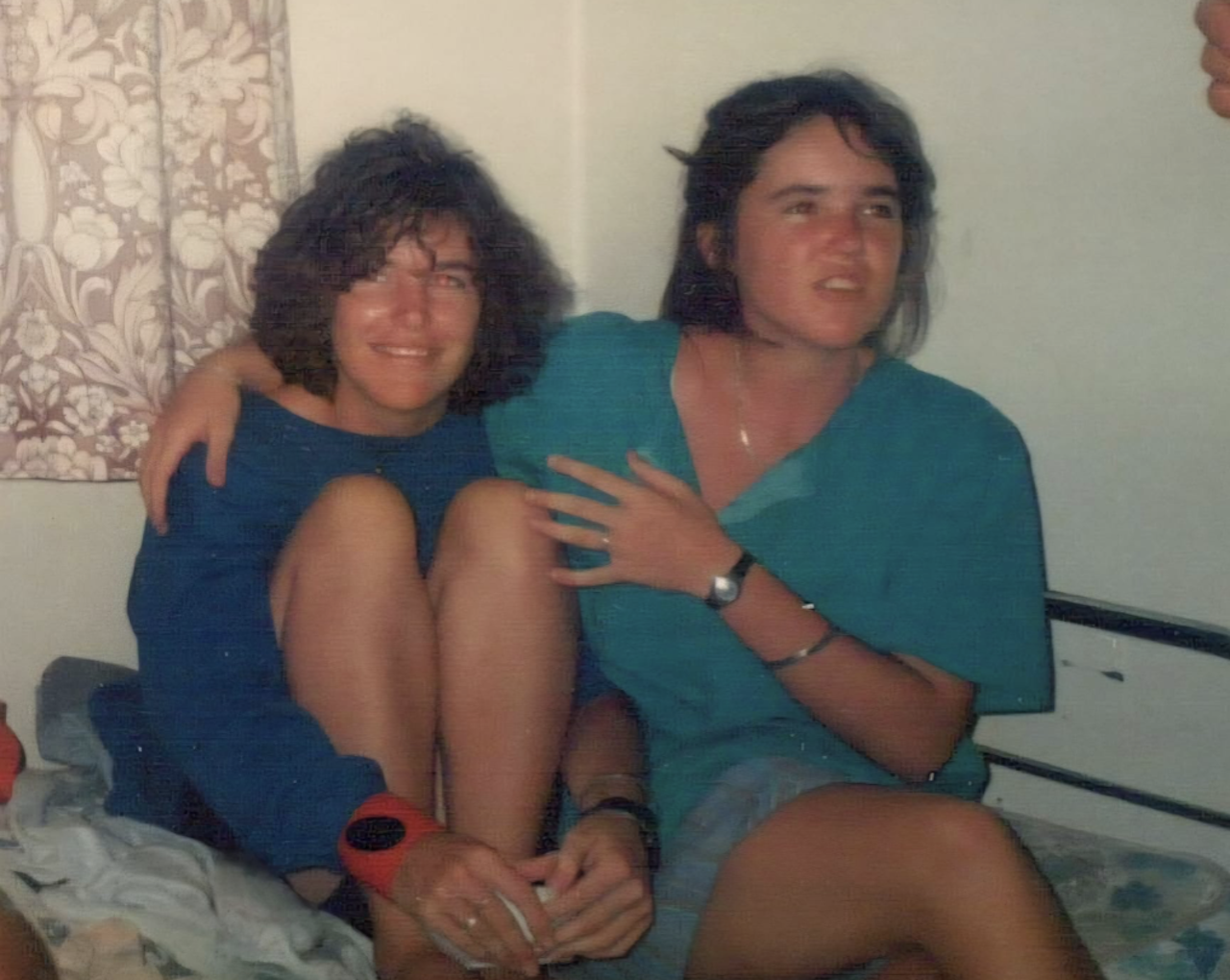
Photo of Susan (L) and her sister Tricia (R) in 1988. (courtesy of Susan Mortimer)
Drifting away From Faith
Around the age of 15, my focus shifted away from faith. I began paying more attention to the social world. Perhaps it was simply adolescence. I became self-conscious, tried to fit in, and got caught up in typical teenage behaviour.
Although I still felt that God existed and was nearby, my earlier clarity faded. My desire to be good and kind remained, but it became buried under insecurity and the pressure to fit in with a culture that often valued being hedonistic and materialistic.
Dealing with Deep Loss and grief
At 19, I met my husband, and I felt a sense of divine guidance in that. We married and started a family. Our sons were born in 1993 and 1995.
When I was seven and a half months pregnant with our second child, my sister, Tricia, was killed in a car accident. This loss shattered my sense of reality. It didn’t just bring grief—it changed how I saw the world entirely; everything felt irrevocably different, and so was I. I questioned how such pain could be allowed, and I unconsciously turned away from God, but still, I knew He was there.
I didn’t know how to grieve. I didn’t know there were stages, or that there was such a thing as healthy vs unhealthy grieving. The internet didn’t exist yet, and therapy wasn’t very accessible—or, in my experience, very helpful. So I pushed it down. I stayed in denial and remained in a prolonged state of unresolved grief for many years. It was like a fog in my mind; I couldn’t think clearly.
Medicating, Struggling and Reaching My Limits
To cope, I began medicating my pain. It escalated slowly over time. It started with antidepressants, then prescription stimulants, binge drinking once a week, and eventually, when that wasn’t numbing enough, I started smoking weed. I felt deeply ashamed, but I didn’t know how to stop or how to face what was underneath it all.
Looking back, it’s kind of miraculous that my marriage survived.
When I was 40, I remember one day standing in my front yard, really thinking about my life—how unhappy I was with myself and the choices I’d made, and where it was all heading. I felt like something was going to give, like serious health issues were around the corner. There was a sense that I had reached a limit.
I wanted to change, to undo the damage, but I had no idea how—or if it was even possible.
Finding Falun Gong
Remarkably, about a week later, a friend of my son told me about Falun Gong and showed me the exercises. I tried them, and afterwards I actually threw up—but then felt this overwhelming sense of wellness, like something had shifted quite deeply.
That experience made me curious. I started learning the exercises online and joined a small group in a park on Saturdays. I had never practiced Tai Chi, Chi Gong, or meditation before. I didn’t really understand what I was doing, but something in me wanted to keep going.
A couple of weeks later, someone told me there was a book. I got a copy of Zhuan Falun, the main text of Falun Gong, and read it in two days.
The Falun Dafa teachings
This book felt like what I had been looking for my whole life. It teaches you how to genuinely be a good person—not just on the surface, but internally, where it actually matters.
One of the key ideas is to look inward instead of blaming outwardly. When something goes wrong, you examine yourself first. That was a completely different way of thinking for me.
It also focuses on three principles: truthfulness, compassion, and forbearance (or fortitude).
Truthfulness isn’t just about not lying—it’s about being honest with yourself. Recognising how your mind spins things to protect your ego, and being willing to face uncomfortable truths.
Compassion isn’t just being nice. Sometimes it means trying to understand someone you really don’t like, instead of reinforcing why you think they’re wrong. It requires humility.
These ideas hit me deeply. They gave structure to something I had always felt but never fully understood, and they challenged me in a very real way.
Undergoing Real change
Within nine months of reading Zhuan Falun, I had embraced a substance-free lifestyle. Within another year, I had processed my sister’s death and found a sense of peace with it. People commented that the colour of my eyes had become deep and bright.
I also started to improve my temperament and behaviour—something I’m still working on. It’s not about being perfect, but about noticing things and gradually changing them.
Although my husband and sons have never read the book, our relationships improved as I changed myself. That was something I didn’t expect. Our family life became calmer and more harmonious, with far less conflict. When issues do arise, they tend to be handled more calmly and respectfully.
The impact of this practice on my life has been profound—not just internally, but in the way it affects everything around me.
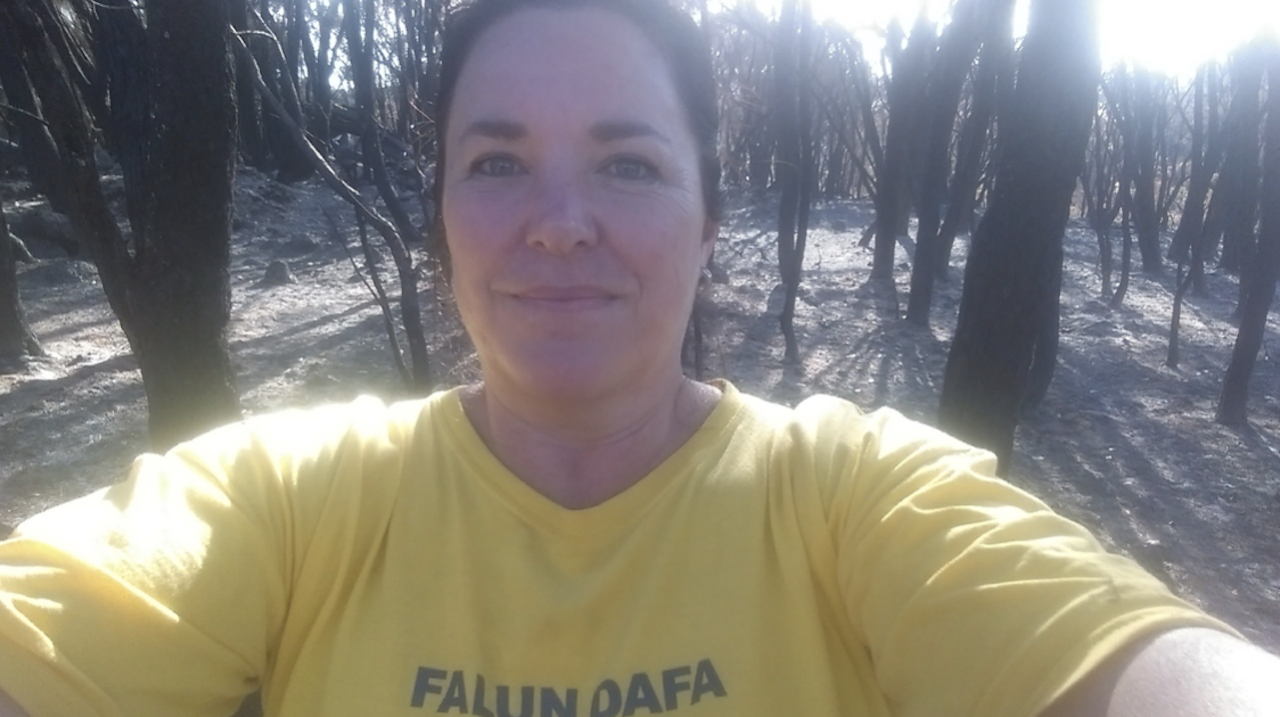
(photo courtesy of Susan Mortimer)
What Falun Gong is (and isn’t)
Falun Gong is a faith-based practice, but it’s very different from traditional religions.
There are:
• No churches or temples
• No hierarchy or authority figures
• No rituals or worship practices
• No collection of money
People study the teachings independently (or together) and apply them in their daily lives. You have to sincerely want to do this practice—it isn’t a social network or a way to hedge your bet on an afterlife.
One thing that stood out to me early on was that you’re not allowed to collect money in the name of Falun Gong. In over 16 years, I have never been asked for financial contributions. That, in itself, felt very different from what I had seen before.
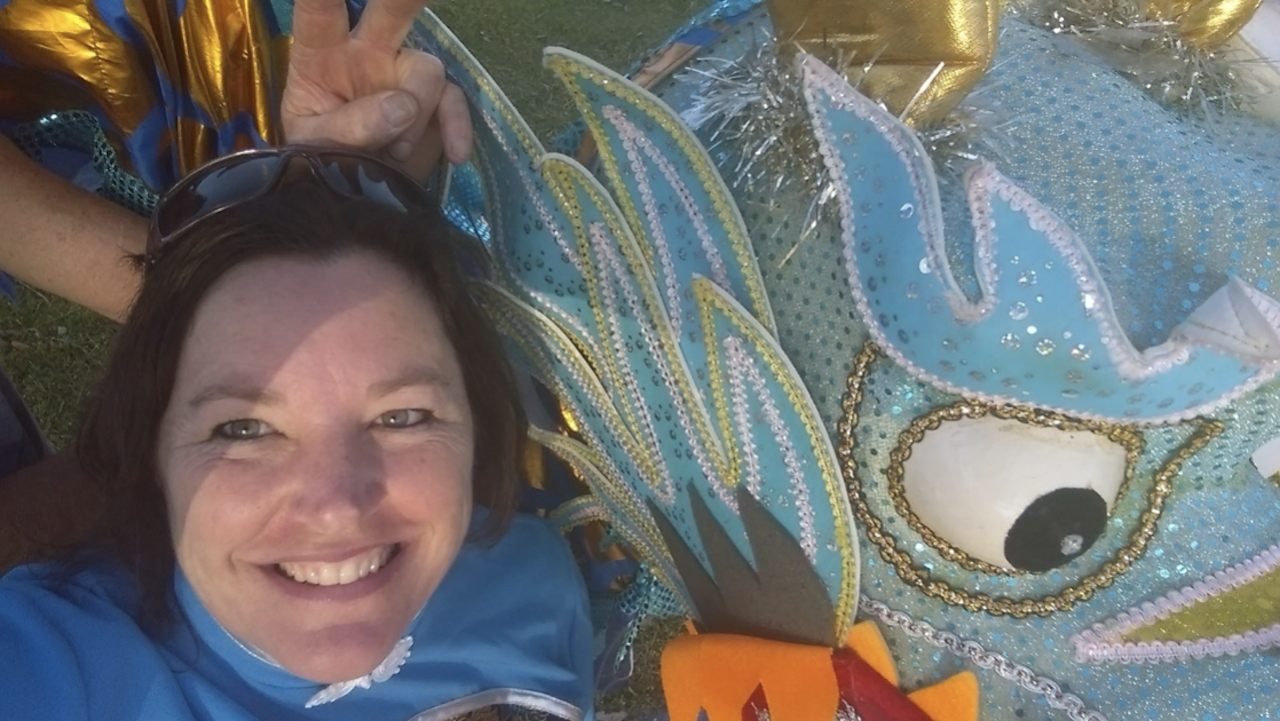
(photo courtesy of Susan Mortimer)
About the persecution Of Falun Gong
Falun Gong is persecuted by the Communist regime in China. The Chinese Communist Party is extremely powerful and highly skilled in propaganda, which has made it difficult for many people to understand what is really happening.
The persecution began in 1999 when China’s leader at the time, Jiang Zemin, demanded that the practice be eradicated. A system of persecution was constructed that became self-perpetuating, involving slave labour and profiting from organ harvesting. Even after Jiang left power and eventually died, the persecution has continued.
To resist and counter the persecution, practitioners raise awareness in a variety of peaceful ways.
This human rights advocacy is separate from the practice itself, and participation is voluntary. The ways of raising awareness range from participating in community events, showcasing traditional Chinese culture, distributing flyers, screening documentaries, informing local, state, and federal politicians, writing blogs, and contributing to media that exposes the truth.
To some, it may seem like Falun Gong is political, but the reality is that it is spiritual and has no interest in politics. It is only because practitioners are being persecuted by a political system that they are compelled to respond.
The dedication of practitioners in raising awareness, in my view, reflects a quiet strength that is very admirable.
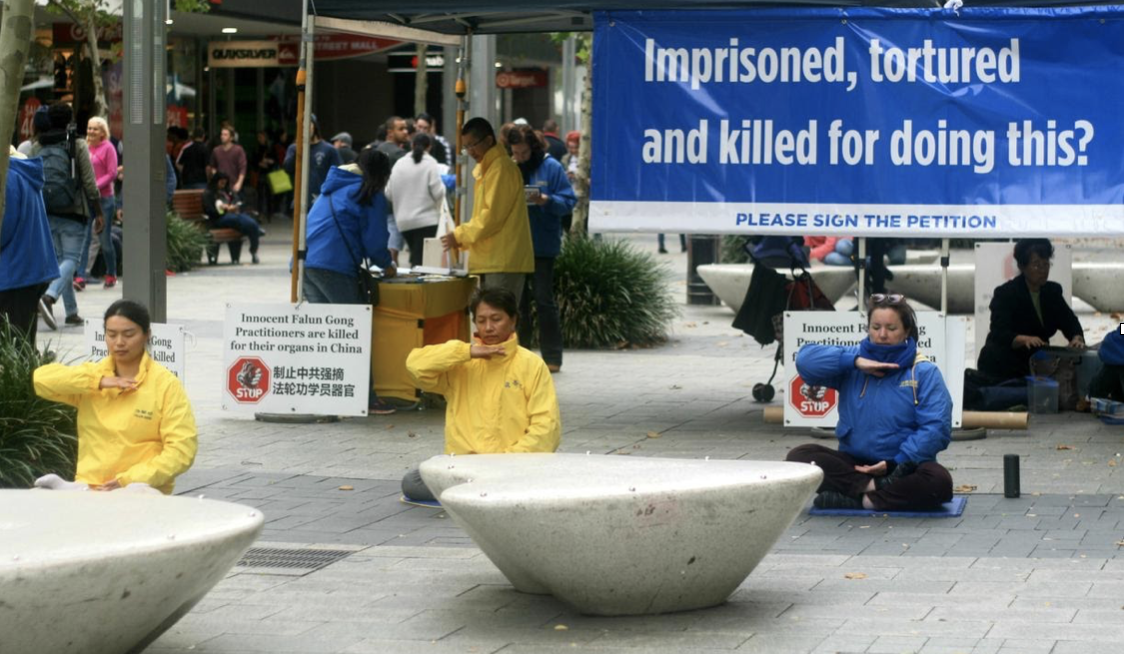
Australian Falun Dafa practitioners raising awareness about human rights abuses in China. (courtesy of Susan Mortimer)
Conclusion - an Ongoing Process of Looking Inward and Finding More Peace
Looking back, I can see that the desire I had as a child—to be genuinely good and kind—never really left me. I just didn’t know how to live it in a real and consistent way.
Falun Gong gave me that framework.
It didn’t happen overnight, and it’s not something you ever “finish.” It’s an ongoing process of looking inward, adjusting, and trying to do better—often in small, everyday situations.
For me, this practice didn’t just help me through grief. It changed the direction of my life. It helped me let go of things that were harming me, and gave me a way to move forward with more clarity and peace.
Falun Gong helped me become a better person—more honest, more compassionate, and more at peace with myself and my life.
That’s why I practice, and why I will continue.
~~
We hope you enjoyed reading this post.
‘Learn Falun Gong—Australia’ is a website run by Australian Falun Dafa volunteers for the benefit of the general public. Falun Dafa is always taught free of charge.
Falun Dafa volunteers are currently holding free online classes where you can learn the exercises from the comfort of your own home. Feel free register your interest here.
Disclaimer: Individual results may vary. Information is provided as a guide only, and does not take the place of professional or medical advice.